Historical Development of Mathematics
The origins of mathematics can be traced back to ancient civilizations, where it emerged as a practical tool for counting, measuring, and recording. The earliest known mathematical records date back to around 3000 BCE in Mesopotamia, where the Sumerians developed a base-60 number system. This system laid the groundwork for various mathematical concepts, including geometry and algebra.
In ancient Egypt, mathematics was primarily utilized for practical purposes, such as land measurement and taxation. The Egyptians developed a decimal system and were adept at basic arithmetic operations. The famous Rhind Mathematical Papyrus, dating back to around 1650 BCE, contains numerous mathematical problems and solutions, showcasing the sophistication of Egyptian mathematics.
The Greeks, particularly during the Hellenistic period, made significant contributions to mathematics. Figures such as Euclid, Archimedes, and Pythagoras laid the foundations of geometry and number theory. Euclid’s “Elements,” a comprehensive compilation of mathematical knowledge, remained a standard textbook for centuries. The Greeks introduced rigorous proofs and logical reasoning, elevating mathematics to a more abstract and theoretical level.
The decline of the Roman Empire saw a stagnation in mathematical progress in Europe, but the Islamic Golden Age (8th to 14th centuries) reignited interest in mathematics. Scholars like Al-Khwarizmi and Omar Khayyam made groundbreaking advances in algebra, trigonometry, and numerical systems. Al-Khwarizmi’s work on solving linear and quadratic equations earned him the title of the “father of algebra,” a term derived from the Arabic word “al-jabr.”
The Renaissance period marked a resurgence of mathematical inquiry in Europe, fueled by a renewed interest in classical knowledge. Mathematicians such as Fibonacci introduced the Hindu-Arabic numeral system, which replaced the cumbersome Roman numerals. The development of calculus by Isaac Newton and Gottfried Wilhelm Leibniz in the 17th century revolutionized mathematics, providing tools for understanding change and motion.
Branches of Mathematics
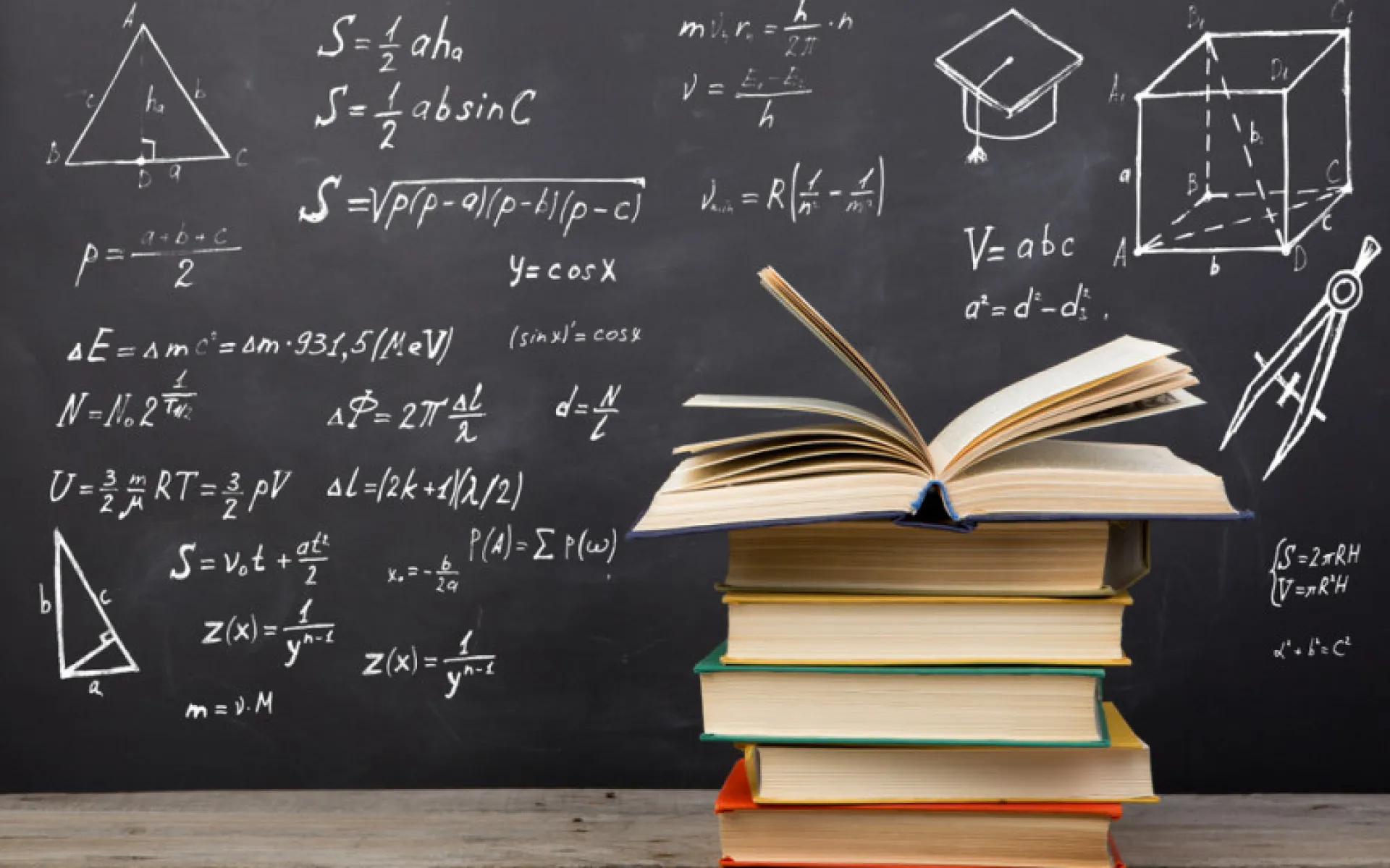
Mathematics is a vast and diverse field, encompassing several branches, each with its own unique focus and applications. The primary branches of mathematics include:
- Arithmetic: The study of numbers and basic operations such as addition, subtraction, multiplication, and division. Arithmetic forms the foundation of mathematics and is essential for everyday calculations.
- Algebra: The branch that deals with symbols and the rules for manipulating those symbols. Algebra allows for the representation of mathematical relationships and the solving of equations. It is fundamental in various fields, including engineering and economics.
- Geometry: The study of shapes, sizes, and the properties of space. Geometry has practical applications in architecture, art, and engineering. It includes subfields such as Euclidean geometry, non-Euclidean geometry, and topology.
- Trigonometry: Focused on the relationships between the angles and sides of triangles, trigonometry is crucial in fields such as physics, engineering, and astronomy. It provides tools for analyzing periodic phenomena and modeling oscillations.
- Calculus: The study of change and motion, calculus is divided into differential calculus (concerned with rates of change) and integral calculus (focused on accumulation of quantities). Calculus is fundamental in physics, engineering, and economics.
- Statistics and Probability: The study of data analysis, interpretation, and the likelihood of events. Statistics is essential in fields such as social sciences, healthcare, and business, enabling informed decision-making based on data.
- Discrete Mathematics: The study of mathematical structures that are fundamentally discrete rather than continuous. It includes topics such as graph theory, combinatorics, and algorithms, with applications in computer science and cryptography.
The Role of Mathematics in Science and Technology
Mathematics plays a crucial role in the advancement of science and technology. It provides the tools and frameworks necessary for modeling complex systems, analyzing data, and solving real-world problems. Here are some key areas where mathematics has made a significant impact:
- Physics: Mathematical equations describe the laws of physics, enabling scientists to predict natural phenomena. From Newton’s laws of motion to Einstein’s theory of relativity, mathematics is essential for formulating scientific theories.
- Engineering: Engineers rely on mathematical principles to design and analyze structures, systems, and processes. Calculus, algebra, and geometry are integral to fields such as civil, mechanical, and electrical engineering.
- Computer Science: Mathematics underpins algorithms, data structures, and computational theory. Discrete mathematics is particularly important in computer science, influencing areas such as cryptography, networking, and artificial intelligence.
- Economics: Mathematical models are used to analyze economic behavior, forecast trends, and optimize resource allocation. Concepts from calculus and statistics are fundamental in economic theory and decision-making.
- Biology and Medicine: Mathematics is increasingly applied in biology and medicine, particularly in fields such as epidemiology, genetics, and bioinformatics. Mathematical models help researchers understand the spread of diseases, genetic variation, and biological processes.
The Importance of Mathematics in Everyday Life
Beyond its applications in science and technology, mathematics is an integral part of our daily lives. From budgeting and financial planning to cooking and home improvement, mathematical skills are essential for making informed decisions. Here are some examples of how mathematics influences everyday activities:
- Financial Literacy: Understanding interest rates, loans, and investments requires mathematical knowledge. Basic arithmetic and algebra are critical for managing personal finances and making sound financial decisions.
- Cooking and Baking: Recipes often require measurements and conversions, necessitating an understanding of fractions, ratios, and proportions. Accurate measurements ensure successful outcomes in the kitchen.
- Home Improvement: Planning home renovation projects involves calculations related to area, volume, and material costs. Geometry is essential for measuring spaces and determining the amount of paint or flooring needed.
- Travel and Navigation: Mathematics is used in calculating distances, travel times, and fuel consumption. GPS technology relies on mathematical algorithms to provide accurate navigation and location services.
- Sports and Games: Statistics play a significant role in sports, from analyzing player performance to predicting outcomes. Mathematics is also fundamental in strategy games, where probability and combinatorial analysis are key components.
The Future of Mathematics
As we look to the future, the role of mathematics will continue to expand in response to emerging challenges and technological advancements. The rise of big data, artificial intelligence, and machine learning presents new opportunities for mathematical research and application. Mathematicians will play a crucial role in developing algorithms, optimizing processes, and ensuring data security.
Moreover, the importance of mathematics education cannot be overstated. Fostering mathematical literacy from an early age is essential for preparing future generations to navigate an increasingly complex world. Innovative teaching methods, technology integration, and real-world applications can enhance students’ engagement and understanding of mathematics.
Conclusion
Mathematics is a dynamic and vital field that has shaped human civilization for millennia. Its historical development, diverse branches, and applications in science, technology, and everyday life underscore its significance. As we continue to explore and innovate within the realm of mathematics, we must recognize its power as a tool for understanding and solving the challenges of our time. Encouraging a deeper appreciation for mathematics will not only enrich individual lives but also contribute to the advancement of society as a whole.
]]>